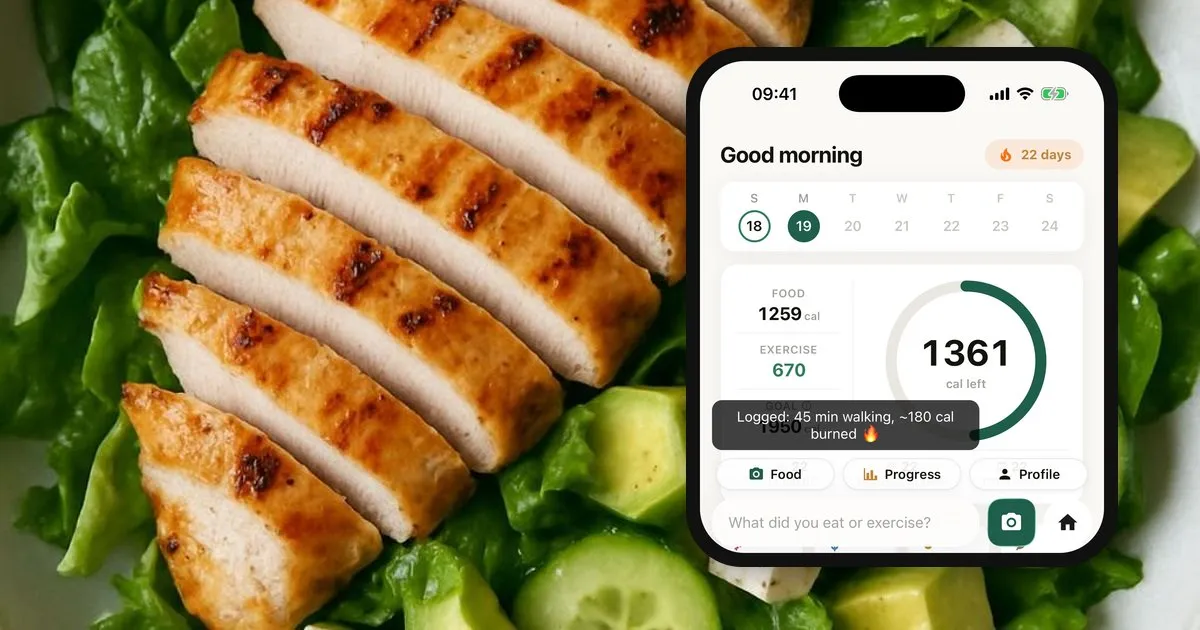
Calorie Tracking for Lifters: Lose Fat, Keep Your Muscle
By Kaelo TeamUpdated
To lose fat without losing muscle, keep three things steady: a modest calorie deficit (about 0.5–1% of body weight a week), a high protein intake (roughly 1.6–2.2 g per kg a day), and heavy training that keeps progressing or at least holds. Tracking food and lifts in the same place is what tells you whether all three are actually happening.
 Download Kaelo
iPhone and Android. Snap a meal, get calories and macros in seconds. Free trial on the yearly plan.
On your computer?Point your phone's camera at the code to install Kaelo.
The practical answer
| Lever | Target while cutting | Why |
|---|---|---|
| Rate of loss | 0.5–1% of body weight a week | Slower loss protects more muscle |
| Protein | 1.6–2.2 g per kg a day | Supplies what muscle needs to repair and grow |
| Training | Same heavy lifts, same or more weight | Tells your body the muscle is still needed |
| Calories | Whatever produces the rate above | Calculated first, then adjusted on real data |
For an 80 kg lifter, that's about 0.4–0.8 kg a week and 130–175 g of protein a day.
The problem
Most lifters track one side well. Training goes in a notebook or a lifting app, and food goes in a calorie app, or nowhere. When strength drops during a cut, nobody can tell whether the deficit was too steep, protein was too low, or sleep and recovery slipped. When the scale stalls, it's not clear whether you're eating more than you think.
What it costs you
- Cutting too fast. Strength drops, sessions feel flat, and part of what you lose is the muscle you were trying to show.
- Protein drifting low. It's easy to hit calories and miss protein, especially on days with takeaway or snacks.
- Guessing exercise calories. Eating back a tracker's estimate for a 60-minute lifting session can quietly cancel the deficit.
How Kaelo helps
Meals in seconds. Photograph the plate; Kaelo identifies the foods, estimates grams and logs calories and protein. Correct the portion of the rice or the meat before saving.
Lifts next to meals. Log each exercise with sets, reps and weight. Steps, active calories and workouts sync from Apple Health and Apple Watch.
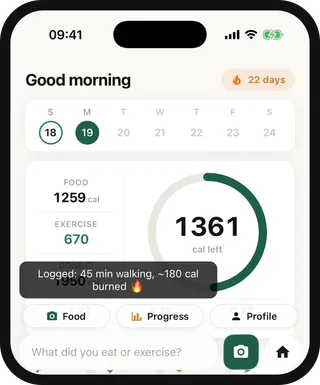
Protein you can see. The dashboard shows protein next to calories all day, so a low-protein day is obvious by lunch, not at bedtime.
Setup checklist
- Get your maintenance from the TDEE calculator, then pick a rate in the calorie deficit calculator. For lifters, 0.25–0.5 kg a week is usually right.
- Set protein from your body weight; see how much protein you need.
- Log every meal for three weeks, including oils and drinks.
- Log every session. Keep your main lifts the same so the numbers are comparable.
- Every two to three weeks, look at average weight and your main lifts together. Weight going down and lifts holding means the cut is working.
What to skip
- Daily weigh-in panic: water and glycogen swing 1–2 kg day to day. Use weekly averages.
- Eating back every exercise calorie.
- Changing your training programme and your diet in the same week; you won't know which one did what.
Sources
- Helms ER et al. Evidence-based recommendations for natural bodybuilding contest preparation: nutrition and supplementation. J Int Soc Sports Nutr, 2014
- Morton RW et al. Protein supplementation and resistance training-induced gains in muscle mass and strength: a meta-analysis. Br J Sports Med, 2018
- Jäger R et al. International Society of Sports Nutrition Position Stand: protein and exercise. J Int Soc Sports Nutr, 2017
Frequently asked questions
How fast can I cut without losing muscle?
A review of evidence for natural bodybuilders recommends losing about 0.5–1% of body weight a week. Faster cuts make it more likely that part of the loss is muscle, especially if you're already lean.
How much protein do I need when cutting?
Around 1.6–2.2 g per kg of body weight a day suits most lifters in a deficit. A meta-analysis found that the benefit of protein for muscle gain levels off around 1.6 g/kg; leaner lifters in a deficit often go higher.
Should I eat back the calories from lifting?
Usually not in full. A strength session burns less than most trackers estimate, and your activity level in a calorie calculator already covers regular training. Watch your weekly average weight instead and adjust.
Can I build muscle and lose fat at the same time?
Yes, mostly for beginners, people returning to training, and people with more body fat. Eat near maintenance, keep protein high and train progressively. Your weight may barely move while your lifts go up.
Do I need to track carbs and fat too?
Calories and protein matter most. Carbs and fat can flex to preference, though many lifters feel better training with some carbohydrate before a session.
Log your next meal in seconds
Download KaeloiPhone and Android. Snap a meal, get calories and macros in seconds. Free trial on the yearly plan.
On your computer?Point your phone's camera at the code to install Kaelo.