Is Vietnamese Food Healthy for Weight Loss? What to Order and What to Watch
By Kaelo TeamUpdated
Vietnamese food is not inherently fattening. Many classic dishes are built from broth, herbs, vegetables, rice noodles and lean grilled meat, with relatively little added fat. What turns a meal heavy is portion size, deep-fried dishes like chả giò, sweet sauces, condensed milk in coffee — and, for health beyond weight, the salt in broths and fish sauce.
 Download Kaelo
iPhone and Android. Snap a meal, get calories and macros in seconds. Free trial on the yearly plan.
On your computer?Point your phone's camera at the code to install Kaelo.
The short answer, dish by dish
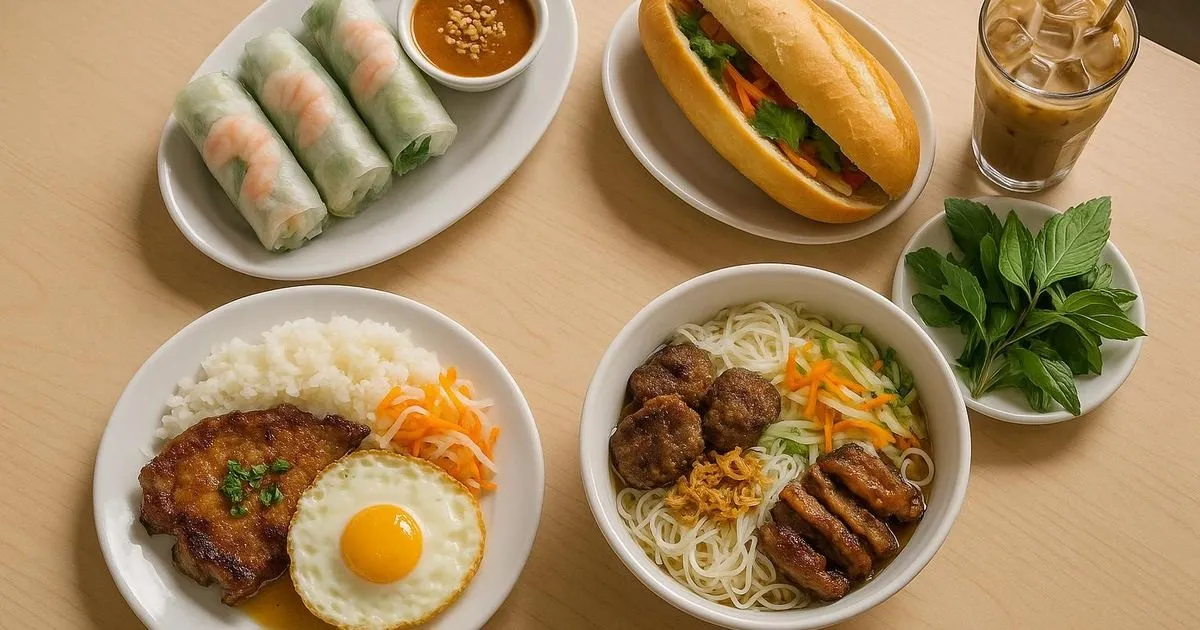
| Dish | Weight-loss friendliness | Why |
|---|---|---|
| Gỏi cuốn (fresh spring rolls) | ✅ Light | Rice paper, herbs, vermicelli, shrimp/pork; not fried |
| Phở (beef or chicken) | ✅ Good — watch noodles | ~77 kcal/100 g (USDA); mostly broth and meat |
| Canh (clear soups) | ✅ Light | Vegetables in broth |
| Bún thịt nướng / bún chả | ⚖️ Moderate | Grilled meat is fine; noodle portion and sweet dipping sauce add up |
| Cơm tấm (broken rice plate) | ⚖️ Moderate–heavy | Large rice portion, fatty grilled pork chop, fried egg |
| Bánh mì | ⚖️ Moderate–heavy | Baguette, pâté, mayo, fatty pork |
| Chả giò (fried spring rolls) | ⚠️ Heavy | Deep-fried; calories mostly from fat |
| Bánh xèo (crispy pancake) | ⚠️ Heavy | Fried in a lot of oil |
| Cà phê sữa đá | ⚠️ Sweet | Sweetened condensed milk |
Why many Vietnamese meals are naturally lighter
- Broth-based dishes. Soups like pho and canh deliver volume and warmth for relatively few calories.
- Herbs and raw vegetables are part of the dish, not a garnish: lettuce, mint, basil, bean sprouts. They add fibre and volume.
- Grilling and steaming are common, so less oil than cuisines built around frying or cream.
- Protein shows up in most meals — beef, pork, chicken, shrimp, fish, tofu.
Where the calories hide
Rice and noodle portions. White rice is about 130 kcal per 100 g cooked, rice noodles about 107 (USDA). A restaurant plate of cơm tấm or a big bowl of bún can carry 300–400 g of either. Asking for "ít cơm" / "ít bún" (less rice / less noodles) is the most effective swap.
Frying. USDA's closest match for a fried pork spring roll (an egg roll with beef and/or pork) is about 270 kcal per 100 g, roughly 175 kcal per 64 g roll. A rice-paper wrapper used for fresh rolls is about 48 kcal per medium sheet before fillings. Same filling, very different total.
Fatty cuts and extras. Grilled pork belly, pork chop with the fat on, bone marrow in pho, mỡ hành (scallion oil) poured over dishes.
Sauces and drinks. Hoisin and the sweet dipping sauce for bún and cơm tấm contain sugar; peanut sauce for gỏi cuốn is calorie-dense. Sweetened condensed milk makes cà phê sữa đá closer to a dessert than a coffee.
The real health watch-out: sodium
Weight isn't the only measure of healthy. Broth, fish sauce, soy sauce and pickles make many Vietnamese meals salty. The WHO recommends adults eat less than 5 g of salt (about 2 g of sodium) a day, and a large bowl of soup plus dipping sauces can use up a big share. Leave some broth in the bowl and dip rather than pour.
How to order Vietnamese food on a diet
- Start with gỏi cuốn, sauce on the side.
- Choose pho tái or pho gà over đặc biệt; ask for fewer noodles and extra herbs and bean sprouts.
- For bún or cơm, choose grilled chicken or lean pork, fewer noodles or less rice, extra vegetables.
- Treat chả giò and bánh xèo as a shared starter, not the meal.
- Order cà phê đen or ask for less condensed milk.
Logging Vietnamese food accurately
Mixed bowls are exactly where photo calorie estimates struggle, so check two things before saving: the noodle or rice amount and any fried items. Kaelo recognises common dishes from a photo and lets you correct the grams of each component. For pho specifically, see calories in pho by bowl size.
Sources
Frequently asked questions
Is Vietnamese food high in calories?
Usually moderate. A bowl of pho is around 77 calories per 100 g according to USDA data, and fresh rice-paper rolls are light. Calories climb with large noodle or rice portions, fried dishes, fatty cuts, coconut-based dishes and sweet drinks.
What is the healthiest Vietnamese dish for weight loss?
Good picks include fresh spring rolls (gỏi cuốn) with the peanut sauce on the side, pho with lean beef or chicken and fewer noodles, grilled meat with plenty of herbs and vegetables, and canh (clear vegetable soups).
Is banh mi healthy?
A banh mi can fit a weight-loss plan, but it's more calorie-dense than it looks: the baguette is the main source of calories, and pâté, mayonnaise and fatty pork add more. Grilled chicken or tofu with extra pickled vegetables is the lighter version.
Is Vietnamese food good for a diet?
It's one of the easier cuisines to diet with, because lean protein, vegetables and herbs are central rather than optional. The two things to manage are portion size and sodium.
Is Vietnamese coffee fattening?
Cà phê sữa đá is made with sweetened condensed milk, which is very sugary and calorie-dense. Black coffee (cà phê đen) has almost no calories; ask for less condensed milk if you love the sweet version.
Log your next meal in seconds
Download KaeloiPhone and Android. Snap a meal, get calories and macros in seconds. Free trial on the yearly plan.
On your computer?Point your phone's camera at the code to install Kaelo.