What Are Macros? Protein, Carbs and Fat Explained
By Kaelo TeamUpdated
Macros (macronutrients) are the three nutrients that provide your calories: protein and carbohydrate at 4 kcal per gram, and fat at 9 kcal per gram. Calories set whether you gain or lose weight; the split between macros affects hunger, muscle and energy. Official guidance puts healthy ranges at 10–35% protein, 45–65% carbs and 20–35% fat.
 Download Kaelo
iPhone and Android. Snap a meal, get calories and macros in seconds. Free trial on the yearly plan.
On your computer?Point your phone's camera at the code to install Kaelo.
The three macros
| Macro | Calories per gram | What it does | Typical sources |
|---|---|---|---|
| Protein | 4 | Builds and repairs muscle and tissue, very filling | Meat, fish, eggs, dairy, tofu, beans |
| Carbohydrate | 4 | Main fuel for brain and hard exercise | Rice, noodles, bread, fruit, potatoes, oats |
| Fat | 9 | Hormones, vitamin absorption, dense energy | Oils, nuts, avocado, fatty fish, butter |
"Macro" is short for macronutrient: macro because you need them in large amounts (tens to hundreds of grams a day). Vitamins and minerals are micronutrients.
Macros to calories, and back
A meal with 30 g protein, 60 g carbs and 15 g fat has:
- 30 × 4 = 120 kcal from protein
- 60 × 4 = 240 kcal from carbs
- 15 × 9 = 135 kcal from fat
- 495 kcal in total
Which means fat is 27% of the calories despite being the smallest number of grams. That is why percentages and grams feel so different, and why fat is the macro to measure carefully: a spoon of oil adds about 120 kcal.
What counts as a healthy split
The US Dietary Guidelines use acceptable macronutrient distribution ranges (AMDR) for adults:
| Macro | Share of daily calories |
|---|---|
| Protein | 10–35% |
| Carbohydrate | 45–65% |
| Fat | 20–35% |
These ranges are wide on purpose: many splits are compatible with good health. The best one is the one you can keep eating for a year.
How to set your own macros
- Start with calories. Work out your TDEE and subtract a deficit if you're losing (how to do that).
- Set protein first. About 1.2–1.6 g per kg of body weight while losing, 1.6–2.2 g per kg if you are lifting to build muscle (protein guide).
- Set fat. Around 20–35% of calories, with a floor of roughly 0.6 g per kg so hormones and vitamin absorption don't suffer.
- Fill the rest with carbs. Whatever calories remain. More if you train hard, fewer if you prefer fat and protein-heavy meals.
Example: 75 kg person, 2,100 kcal target, aiming at 1.6 g/kg protein. Protein 120 g (480 kcal). Fat at 28%, about 65 g (585 kcal). Remaining 1,035 kcal in carbs, about 259 g.
Do macros matter more than calories?
For weight, calories dominate: when researchers hold protein constant, low-carb and low-fat diets give very similar fat loss. Macros matter for the things around weight:
- Muscle. Enough protein plus resistance training keeps muscle while you lose fat.
- Hunger. Protein and fibre-rich carbs keep people fuller on the same calories.
- Performance. Hard training goes better with enough carbohydrate.
Tracking macros in practice
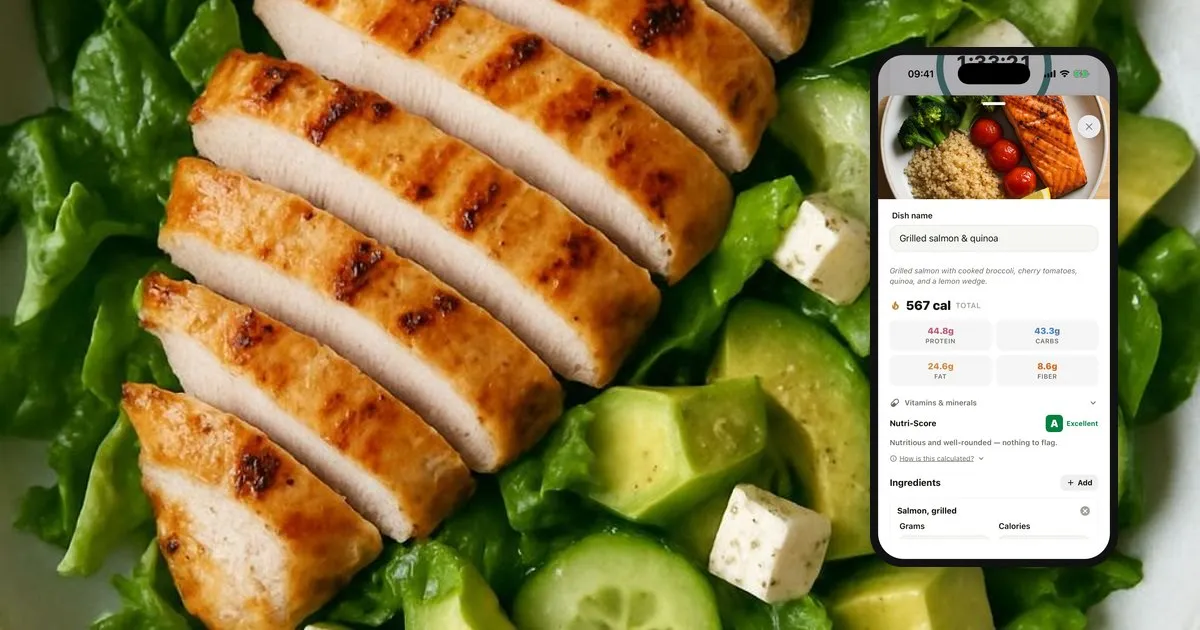
The hard part is the accuracy of the logging, not the arithmetic. Packaged food labels give macros; for home cooking and restaurants you need weights or a photo estimate. Kaelo shows protein, carbs and fat for every meal you log from a photo, a barcode or a search, and totals them against your daily targets, so you can see by lunchtime whether protein is on track.
Sources
- Dietary Guidelines for Americans 2020–2025 (acceptable macronutrient distribution ranges)
- USDA FoodData Central: energy conversion (Atwater) factors and nutrient data
- Morton RW et al. A systematic review, meta-analysis and meta-regression of the effect of protein supplementation on resistance training-induced gains in muscle mass and strength. Br J Sports Med, 2018
Frequently asked questions
How many calories are in a gram of protein, carbs and fat?
Protein and carbohydrate have about 4 kcal per gram, fat about 9 kcal per gram, and alcohol about 7 kcal per gram. These are the Atwater factors used on food labels.
Do I need to track macros to lose weight?
No. Calories decide weight change. Tracking macros is worth it if you want to protect muscle (hit a protein target), manage hunger, or follow a plan from a coach or doctor. If you only track one macro, make it protein.
What is a good macro split for fat loss?
There is no single best split. A practical default is protein first (1.2–1.6 g per kg of body weight), fat at roughly 25–30% of calories, and carbs filling the rest. Pick the carb-to-fat balance you can stick to.
What are micros?
Micronutrients are vitamins and minerals. You need them in milligrams or micrograms rather than grams, and they supply no calories.
Is fiber a macro?
Fiber is a type of carbohydrate, so it counts inside the carbs figure. It is only partly digested, so it provides fewer calories than 4 per gram, which is why some people track net carbs.
Log your next meal in seconds
Download KaeloiPhone and Android. Snap a meal, get calories and macros in seconds. Free trial on the yearly plan.
On your computer?Point your phone's camera at the code to install Kaelo.