What Is 16:8 Intermittent Fasting? Schedule, Research and Who Should Skip It
By Kaelo TeamUpdated
16:8 intermittent fasting means eating only within an 8-hour window each day and fasting for the other 16, for example 12:00 to 20:00. It's a way to limit when you eat, not what. Controlled trials find it helps weight loss mainly by lowering calorie intake, with results similar to ordinary calorie restriction.
 Download Kaelo
iPhone and Android. Snap a meal, get calories and macros in seconds. Free trial on the yearly plan.
On your computer?Point your phone's camera at the code to install Kaelo.
What 16:8 means
The first number is hours fasting, the second is hours eating. It is one version of time-restricted eating.
| Plan | Fast | Eat | Example window |
|---|---|---|---|
| 12:12 | 12 h | 12 h | 8:00–20:00 |
| 14:10 | 14 h | 10 h | 10:00–20:00 |
| 16:8 | 16 h | 8 h | 12:00–20:00 |
| 18:6 | 18 h | 6 h | 12:00–18:00 |
| 20:4 | 20 h | 4 h | 14:00–18:00 |
Most of the fast overlaps with sleep, so 16:8 usually means skipping breakfast or an early dinner.
What happens in the fast
After a meal, insulin is high and your body stores energy. Roughly eight to twelve hours later, glycogen in the liver runs down and the body leans more on fat for fuel. Claims of dramatic effects at 16 hours ("autophagy", "reset") come mostly from animal and cell studies; human evidence is limited. The reliable effect is practical: fewer eating occasions, and often fewer calories.
What the research says
- A 2019 review in the New England Journal of Medicine found intermittent fasting can improve markers such as blood pressure, insulin sensitivity and weight in the short term, mostly from animal studies and small human trials.
- The TREAT trial (2020) randomised 116 adults to 16:8 or normal eating for 12 weeks. The 16:8 group lost a little more weight, but the difference was not statistically significant, and some of the loss was lean mass.
- Longer comparisons with plain daily calorie restriction generally find similar fat loss.
Takeaway: choose it if a window fits your life and you find it easier than counting. It is not a metabolic shortcut.
A sample 16:8 day
| Time | What |
|---|---|
| 07:00 | Water, black coffee or tea |
| 12:00 | First meal: protein plus fibre (eggs and vegetables, or chicken and rice) |
| 15:30 | Snack: yogurt or fruit and nuts |
| 19:30 | Last meal, then the fast starts |
Your protein target, ideally 30–40 g in each of two or three meals, doesn't change because the window is shorter (protein guide).
Common problems and fixes
- Headaches or irritability: drink more water, add salt to a meal, and shift gradually from 12:12.
- Overeating at the first meal: plan it, and include protein.
- Poor sleep: don't eat a large meal right before bed.
- Training in the fast: schedule hard workouts inside or near your window.
Setting it up in Kaelo
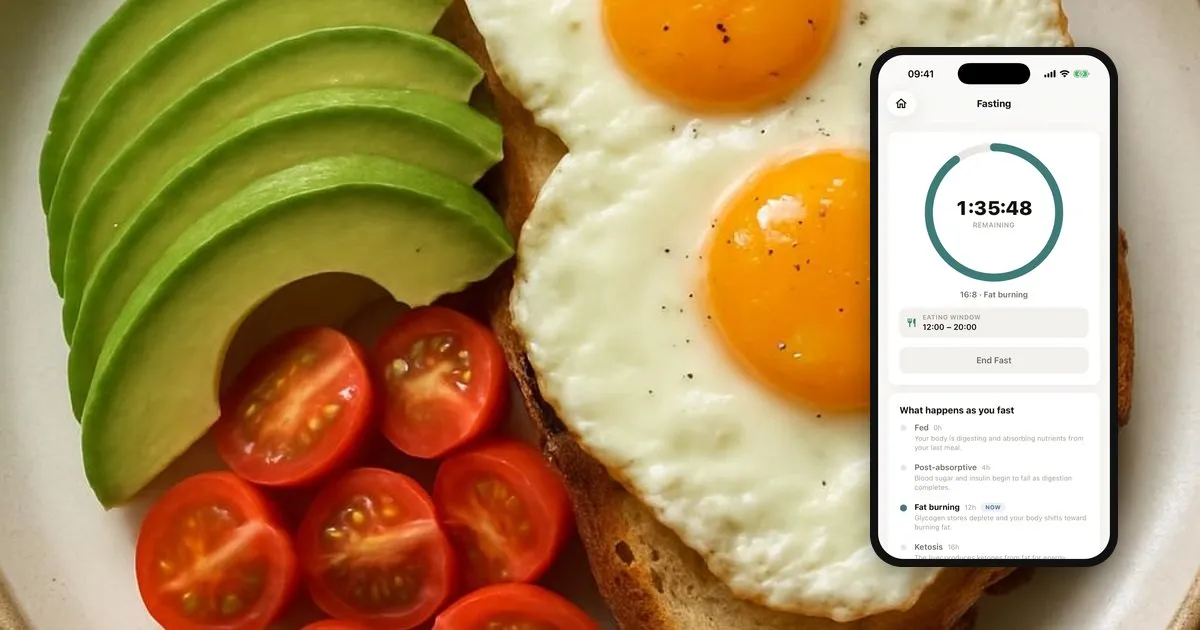
Kaelo has a fasting timer with protocols such as 16:8, shows the stage you're in and your eating window, and keeps a history and streak. Pair it with your calorie target from the TDEE calculator. See calorie tracking while fasting for the setup.
Kaelo provides general information, not medical advice. Talk to a clinician before fasting if you have a medical condition.
Sources
- de Cabo R, Mattson MP. Effects of intermittent fasting on health, aging, and disease. N Engl J Med, 2019
- Lowe DA et al. Effects of time-restricted eating on weight loss and other metabolic parameters in women and men with overweight and obesity: the TREAT randomized clinical trial. JAMA Intern Med, 2020
- Dietary Guidelines for Americans 2020–2025
Frequently asked questions
What can I drink while fasting 16:8?
Water, plain tea and black coffee are fine. Anything with calories, such as milk, sugar or juice, breaks the fast in the usual definition.
Does 16:8 work better than counting calories?
Trials have not found a clear advantage. A 12-week randomised trial in JAMA Internal Medicine found 16:8 produced no significant weight loss over eating normally, while others find similar results to calorie restriction. It works when it helps you eat less; if it doesn't, it doesn't.
Will fasting make me lose muscle?
It can if protein is low and you lose weight quickly. Keep protein around 1.2–1.6 g per kg, spread over your eating window, and keep strength training.
Who should not fast?
People who are pregnant or breastfeeding, under 18, have a history of eating disorders, are underweight, or take insulin or glucose-lowering medication should not start without medical advice.
Do I need to count calories on 16:8?
It's optional. A short window makes overeating harder for many people, but a large dinner can erase the deficit. If your weight isn't moving, log a few days to check.
Log your next meal in seconds
Download KaeloiPhone and Android. Snap a meal, get calories and macros in seconds. Free trial on the yearly plan.
On your computer?Point your phone's camera at the code to install Kaelo.